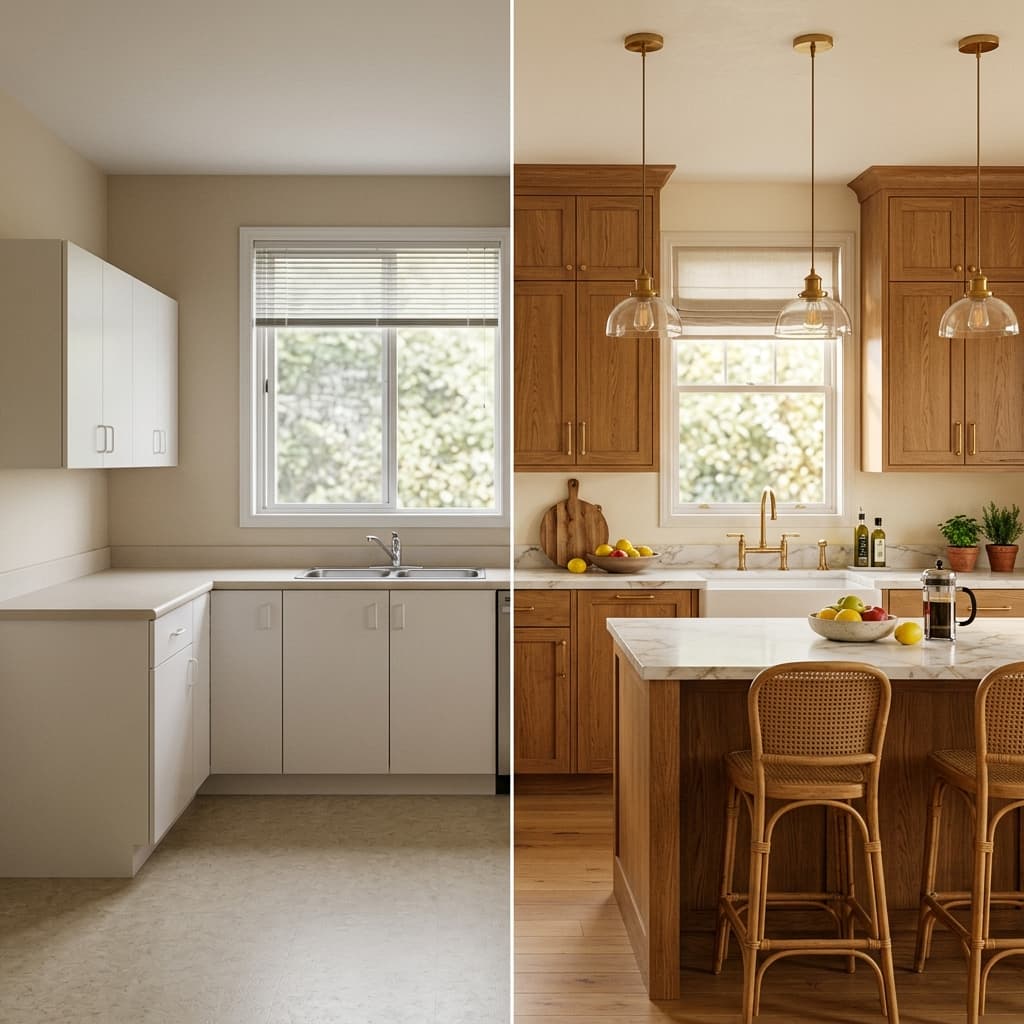
How AI is revolutionizing 3D kitchen renders in 2026
See how interior designers use artificial intelligence to generate photorealistic kitchen perspectives in a matter of seconds.
Artificial intelligence has reached a turning point in the interior design world. Gone are the days when a complex 3D model meant weeks of waiting and a huge budget. In 2026, AI lets every designer become their own 3D artist.
In short: why use it today?
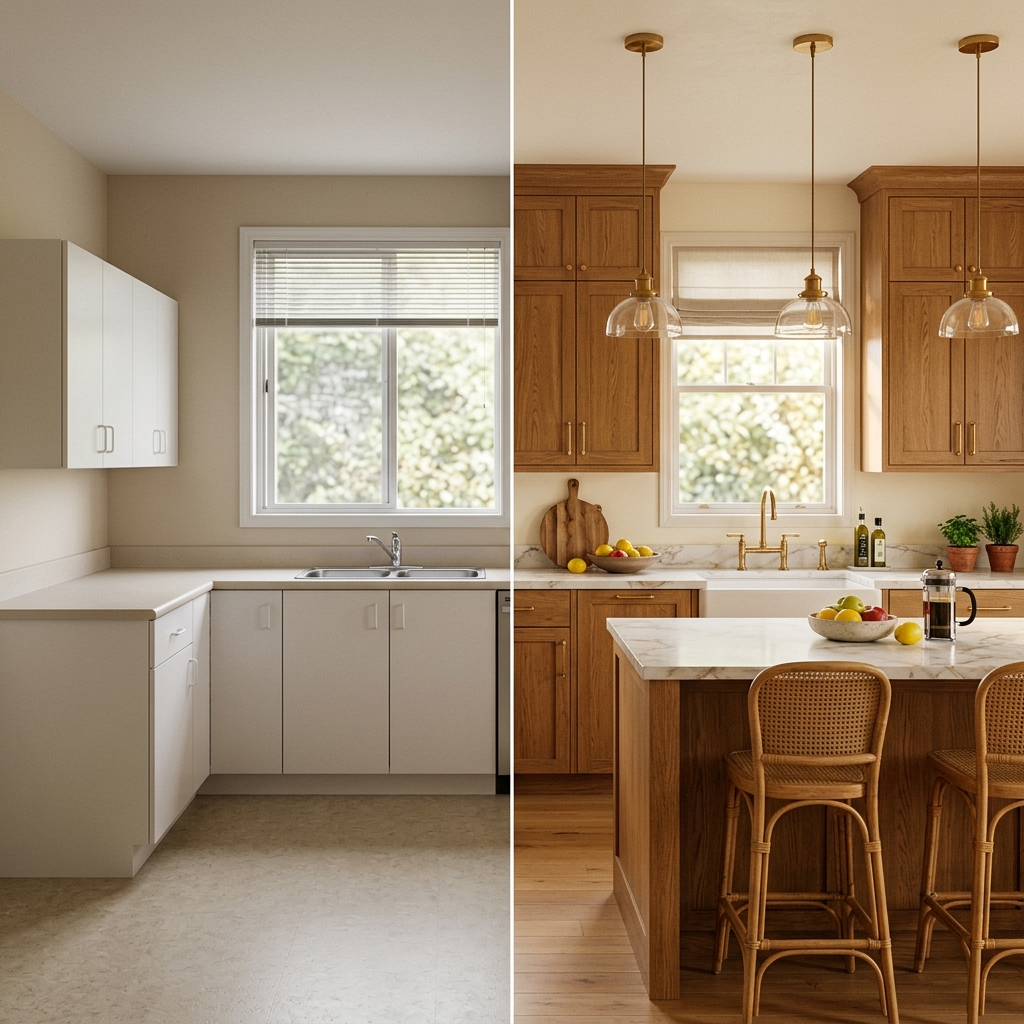
AI for kitchen rendering offers unmatched speed (under 30 seconds), preserved architecture through strict masks, and the remarkable ability to choose from libraries of real manufacturer products. By eliminating hours of traditional 3D modelling, designers can present concepts to their clients from the very first meeting.
The 3 steps of an AI-assisted kitchen render
1. The photo or the sketch
Everything starts with a base. The algorithm doesn’t create the geometry; it dresses it. You can provide:
- A photo of the current space (taken during your first visit to the client’s home).
- A plain white or rough SketchUp model of your elevation.
- A hand-drawn sketch with strong guiding lines.
Our tip: always make sure natural light sources (like windows) are clearly visible in your starting image.
2. Adding inspiration and materials
Here, instead of hunting for pixels, the AI looks for a stylistic direction. With a simple prompt and an uploaded “moodboard” image:
- The AI will pick up the exact textures from a reference image (a Calacatta marble backsplash).
- With engines that specialize in kitchens (like Atelier 14), “Shaker” or “slab” doors will be recognized, unlike general-purpose AI such as Midjourney, which often invents pointless asymmetrical furniture.
3. Generation and inpainting
Fine-grained touch-ups are what polish the render. In 2026, artificial intelligence doesn’t stop at the first iteration. With the selection tool:
- Target distracting accessories and remove them (“Remove this pot”).
- Replace the current countertop with a “matte black quartz countertop” without affecting the light in the room.
The bottom line
The democratization of AI doesn’t replace the talent of kitchen designers; it removes the technical friction of visualization. Firms that adopt these tools in 2026 find that their clients make decisions faster when they can see a realistic render of their project from the very first meeting.
Ready to give it a try? Start your Atelier 14 trial today.