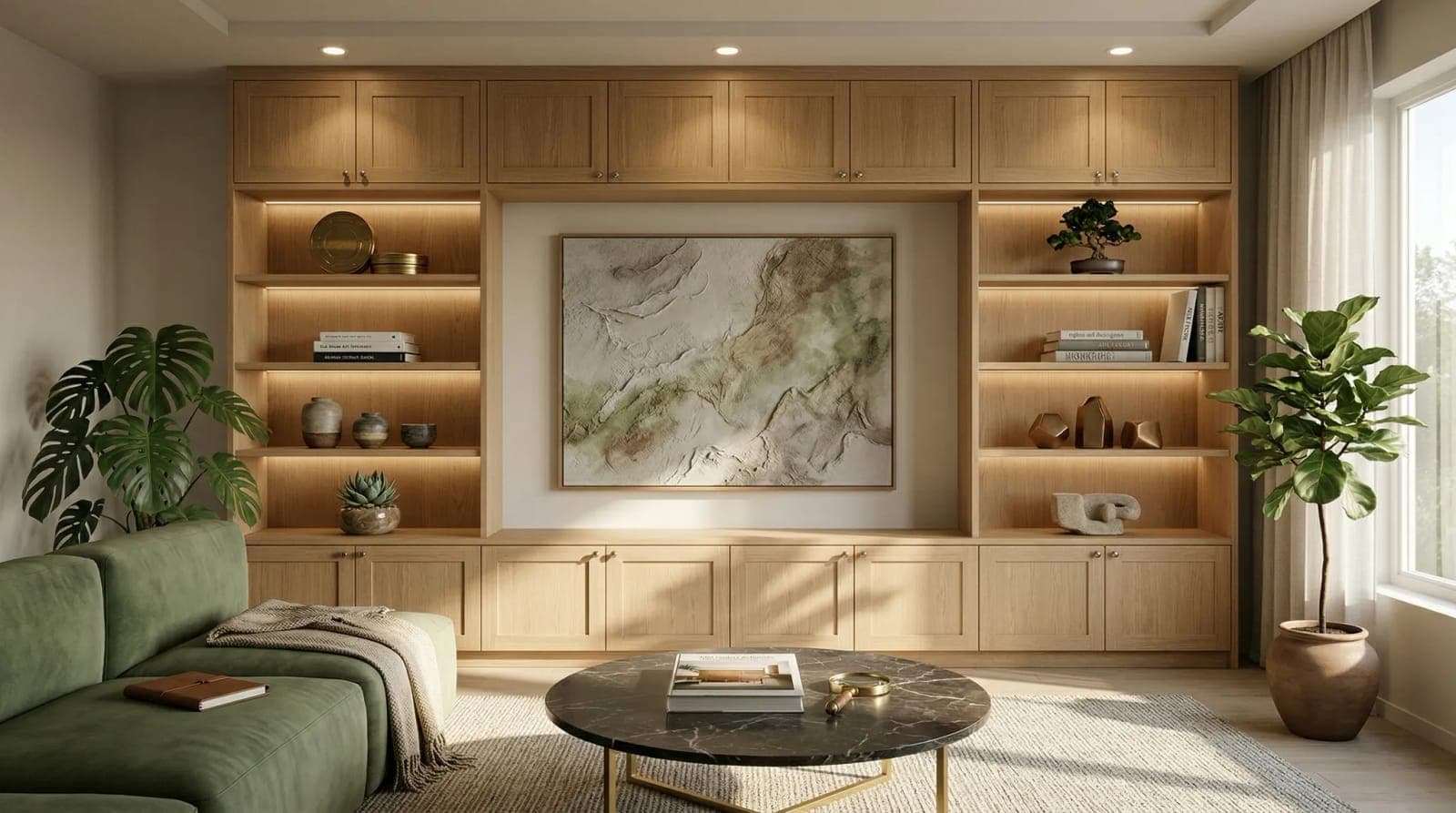
Biophilic design in Quebec: turn your home into a wellness oasis
Learn how biophilic design can turn Quebec spaces into wellness sanctuaries that blend nature and modern style. A guide for design pros.
In a world where concrete and screens dominate our daily lives, the search for a refuge, a breath of fresh air, has never been more urgent. In Quebec, where winters are long and the natural landscapes are breathtakingly beautiful, the desire to bring that essence of nature indoors is more than a trend: it’s a fundamental need. This is where bio-transformation comes in, a powerful concept that goes far beyond adding a few green plants. It’s about total immersion in nature, a design philosophy that promises to transform any space into a true wellness oasis.
For interior design professionals, kitchen designers and architects in Quebec, understanding and mastering biophilic design is a huge opportunity. Not only to create environments that are aesthetically remarkable, but above all to design places that nourish the soul, improve health and boost the productivity of the people who live and work in them. Say goodbye to grey, monotonous interiors; make way for vitality, serenity and the harmony of natural elements. Get ready to discover how to integrate this revolutionary approach and give your clients spaces that celebrate life and reconnect people with their natural environment.
The foundations of biophilic design: principles and benefits for Quebec
The term “biophilia,” popularized by biologist Edward O. Wilson, refers to our innate tendency to focus on life and life processes. Biophilic design is the application of this human connection to nature in the design of buildings and interior spaces. It isn’t just a decorating fad, but an approach based on in-depth scientific research in environmental psychology, demonstrating the positive effects of nature on our physical and mental well-being.
The key principles of biophilic design
Biophilic design is built around three main categories, each with several patterns that can be integrated into a project:
-
Nature in the space (direct experience): Integrating real, direct natural elements.
- Visual connection with nature: Views of vegetation, water, landscapes.
- Non-visual connection with nature: Sounds of water, natural scents, tactile textures.
- Thermal and airflow variability: Changes in temperature, natural breezes.
- Presence of water: Fountains, pools, aquariums.
- Dynamic and diffuse light: Making the most of natural light, interplay of light and shadow.
- Connection with natural systems: Understanding ecological processes (the water cycle, plant growth).
-
Natural analogues (indirect experience): Integrating elements that evoke nature indirectly.
- Biomorphic forms and patterns: Using curves and organic shapes inspired by nature.
- Material connection with nature: Using natural materials (wood, stone, cork) in their raw or minimally processed state.
- Complexity and order: Repeating and fractal patterns found in nature.
-
Nature of the space (spatial experience): Approaching the design of the space itself to mimic natural conditions.
- Prospect and refuge: Creating areas with open views (prospect) and more intimate, sheltered spots (refuge).
- Mystery: Creating spaces that invite exploration and discovery.
- Risk/peril: Integrating elements that evoke a sense of controlled risk (for example, a secure view from a height).
The concrete benefits for occupants in Quebec
Integrating biophilic design in Quebec offers a host of benefits, especially relevant in a climate where natural light is sometimes limited and contact with nature can be hampered by the weather:
- Less stress and anxiety: The mere presence of plants or a view of nature lowers cortisol, the stress hormone.
- Better concentration and productivity: Studies show increased creativity and cognitive performance in biophilic environments.
- Better air quality: Plants purify the air by absorbing toxins and increasing humidity.
- Less absenteeism: In the workplace, employees are sick less often.
- Improved mood and overall well-being: Contributes to a feeling of calm and happiness.
- Faster healing: In healthcare facilities, patients recover more quickly.
These benefits are all the more valuable in Quebec’s urban environments, where the pace of life is intense and the need to recharge is crucial.
Strategies for integrating biophilic design: key elements and practical applications
Integrating biophilic design into a Quebec project calls for a thoughtful, creative approach. It isn’t about simply “adding plants,” but about weaving nature into the very fabric of the space.
1. Greenery: the heart of bio-transformation
- Indoor green walls: Spectacular and effective, they purify the air, absorb noise and offer a strong visual connection with nature. Modular systems can adapt to a range of scales and budgets.
- Indoor gardens and atriums: Ideal for large spaces, they create a microclimate and an impressive focal point.
- Strategically placed houseplants: Choose plants suited to the Quebec climate and to indoor conditions (light, humidity).
- For low light: Zamioculcas, Sansevieria, Pothos.
- For humidity: Ferns, Calatheas, Monstera.
- Large statement plants: Ficus lyrata, indoor olive tree, Strelitzia.
- Native and Quebec-adapted plants:
- Indoors: Some native ferns can be grown in pots; preserved lichen for green walls.
- Outdoors (visible from inside): Landscape balconies or terraces with local species such as maple, birch and balsam fir, and fruiting shrubs such as blueberry or haskap.
2. Natural light and dynamic lighting
Light is a pillar of biophilic design. In Quebec, where sunshine varies greatly from season to season, making the most of it is essential.
- Maximize openings: Large windows and patio doors to let in as much natural light as possible.
- Glare control: Blinds, sheers and sunshades to control light without blocking it completely.
- Circadian lighting: Use LED lighting systems that mimic the changes in colour and intensity of natural light throughout the day, helping regulate occupants’ biological rhythms.
- Interplay of light and shadow: Integrate elements (trellises, perforated screens, plants) that create dynamic shadow patterns, evoking light filtering through a forest canopy.
3. Organic materials and textures
The choice of materials is key to creating an indirect connection with nature.
- Wood: Favour local species (maple, birch, oak) for floors, accent walls and furniture. Aged or raw wood adds rich texture.
- Natural stone: Slate, granite and limestone for countertops, flooring or walls.
- Natural textiles: Wool, linen, cotton, hemp and jute for rugs, curtains and cushions.
- Cork: A durable, insulating and visually warm material for wall or floor coverings.
- Terrazzo and exposed concrete: Used sparingly, they can evoke mineral landscapes and are very durable.
4. Biomorphic forms and patterns
Avoid straight lines and sharp angles in favour of the soft, organic shapes found in nature.
- Gently curved furniture: Chairs, tables and sofas with shapes inspired by pebbles, leaves and the human body.
- Wall and textile patterns: Inspired by leaf veins, ripples on water and honeycomb cells.
- Fluid layouts: Smooth, natural circulation with no abrupt obstacles.
5. The subtle presence of water
The sound and sight of water have a proven calming effect.
- Indoor fountains: Small wall-mounted or tabletop fountains, well integrated into the design.
- Aquariums: A fascinating miniature ecosystem that brings life and movement.
- Outdoor water features: Visible from inside, they connect the space to the outdoor soundscape and views.
As a professional, visualizing these elements before they’re built is crucial. That’s where a tool like Atelier 14 really comes into its own. With high-quality AI renders, you can show your clients realistic simulations of green walls, natural light effects or organic textures, so they can fully picture themselves in their future biophilic oasis.
Specific challenges and innovative solutions for the Quebec market
Quebec’s climate, with its harsh winters and sometimes humid summers, presents unique challenges for biophilic design. However, these challenges can be turned into opportunities with innovative solutions.
1. Managing climate and humidity
- Issues: Dry, cold winters can harm most tropical plants and affect occupants’ comfort.
- Solutions:
- Built-in humidification systems: Essential for maintaining an optimal humidity level (between 40% and 60%) for plants and human well-being.
- Choosing hardy plants: Favour plants that tolerate changes in humidity or are more robust (e.g., Zamioculcas, Sansevieria, certain varieties of Dracaena).
- Closed-loop green walls: Some green walls are designed with irrigation and water recirculation systems that help maintain humidity locally.
- High-performance insulation: Make sure the building envelope is well insulated to prevent heat loss and drafts that could stress plants.
2. Making the most of light in winter
- Issues: Short days and weak winter sunlight can make it hard for plants to grow and can affect mood.
- Solutions:
- Supplemental grow lights: Use dedicated LED grow lamps, discreetly integrated into the design, to supplement natural light.
- Passive design strategies: Design south-facing openings to maximize solar gain in winter.
- Reflective surfaces: Use light colours and reflective materials (mirrors, polished surfaces) to spread light deeper into the space.
- High-performance, energy-efficient windows: Minimize heat loss while maximizing daylight.
3. Space constraints in urban settings
- Issues: City apartments and offices are often limited in size.
- Solutions:
- Going vertical: Green walls, shelves for hanging plants, vertical herb gardens in kitchens.
- Multifunctional furniture: Coffee tables with built-in planters, bookcases with dedicated spaces for plants.
- Indoor micro-gardens: Small terrariums, tabletop gardens, or plant arrangements in elegant containers.
- Compact, modular design: Choose biophilic elements that fit in without overloading the space.
4. Maintenance and durability
- Issues: Maintaining natural elements can be seen as a burden.
- Solutions:
- Automated irrigation systems: For green walls and large installations, considerably reducing the maintenance load.
- Low-maintenance plants: Recommend hardy plants that need little water or light.
- Sustainable, local materials: Choose FSC-certified wood from Quebec, local stone and eco-friendly textiles to minimize the environmental footprint and ensure longevity.
- Training occupants: Provide simple care guides so clients can look after their new “oasis.”
By anticipating these Quebec-specific challenges, designers can offer robust, lasting solutions that ensure the success and durability of their bio-transformation projects.
Biophilic design, a lasting investment: impact and added value
Beyond the immediate well-being benefits, integrating biophilic design into residential and commercial projects in Quebec is a strategic, lasting investment that can significantly increase a property’s value.
1. Higher property value and appeal
In a competitive real estate market, properties that stand out with unique, sought-after features have a clear advantage.
- Differentiation: A biophilic interior is a powerful selling point, attracting buyers who care about their well-being and the environment.
- Higher perceived value: Spaces that breathe nature are often seen as more luxurious, healthier and more pleasant to live in, justifying a higher sale price or rent.
- Growing demand: Environmental awareness and the desire for well-being are on the rise. Buyers and tenants are actively looking for environments that support a healthy lifestyle.
2. Impact on workplaces
Biophilic design is especially relevant for offices and commercial spaces.
- Attracting and retaining talent: Companies that offer pleasant, healthy work environments find it easier to attract and retain employees.
- Greater productivity and creativity: Research has shown that employees in biophilic spaces are more focused, more creative and less stressed, which translates into better overall performance.
- Less absenteeism: A healthy environment reduces the number of sick days.
- Positive brand image: Companies that integrate biophilic design signal a commitment to their employees’ well-being and to environmental responsibility.
3. Sustainability and environmental responsibility
Biophilic design aligns naturally with the principles of sustainable development.
- Lower energy consumption: Making the most of natural light and ventilation reduces the need for artificial lighting and air conditioning.
- Better indoor air quality: Less reliance on chemical air purifiers thanks to plants.
- Use of eco-friendly materials: Encourages renewable, recycled or local resources, reducing the project’s carbon footprint.
- LEED and WELL certification: Biophilic projects can contribute to earning recognized environmental certifications, further increasing their value.
As design professionals in Quebec, offering biophilic solutions means giving your clients not only a beautiful space, but also an investment in their health, their productivity and the long-term value of their property. It’s an approach that fits perfectly with Quebec values of respect for nature and the pursuit of a better quality of life.
Conclusion: reinvent your interior with bio-transformation
The bio-transformation of our interiors into true green oases is no longer a distant dream, but an accessible and highly beneficial reality. For interior designers, kitchen designers and architects in Quebec, it’s an invitation to rethink how we design our spaces, putting the human connection to nature at the heart of every project.
By integrating the principles of biophilic design, you’re not just making a place more beautiful; you’re creating environments that breathe life, improve well-being, boost productivity and increase the intrinsic value of properties. From lush green walls to the play of natural light, to the thoughtful use of organic materials and biomorphic forms, every design choice helps create a sanctuary of serenity.
Quebec, with its natural wealth and its commitment to a healthy lifestyle, is the ideal ground for this green revolution. Climate challenges can be overcome through innovation and careful planning, turning every constraint into an opportunity to create even more resilient and inspiring spaces.
Ready to turn interiors into true havens of peace where nature takes its rightful place? Let your creativity run free and visualize these incredible transformations. With AI rendering tools like Atelier 14, you can bring your boldest biophilic concepts to life, giving your clients a clear, inspiring vision of their future oasis.
Explore the endless possibilities of biophilic design and discover how your projects can not only meet your clients’ needs, but also enrich their everyday lives.
See nature come to life in your projects. Discover how Atelier 14 can help you create photorealistic renders of your biophilic concepts. Visit our pricing page to learn more about our plans.